
 Martin
“I’m Fine” – When employees stop speaking up

The biggest risk to an organisation isn’t always what people say. It’s what they’ve stopped saying or don’t say at all. As a result, this week, we are looking at beneath’ the blanket term “I’m fine” and the importance of psychological safety in the workplace.
We are all familiar with this term, which might be one of the most common phrases heard in workplaces. It’s often a simple, quick come back. A response to the equally familiar “how are you?”. And while etiquette is important, collusive and inclusive, at a psychological level , these simple words often cover up personal matters, anxieties, uncertainty, frustration, exhaustion or someone struggling to engage.
What we also know is that most people don’t look past “I’m fine”, and for organisations and businesses around the world the expectation is often for employees to ‘be fine’. But when individuals stop contributing, challenging ideas or sharing concerns they are frequently communicating something or importance.
If unattended employees can
- Gradually withdraw
- Stop asking questions.
- Stop offering suggestions.
- Stop challenging or disagreeing.
- Stop bringing their whole selves to work.
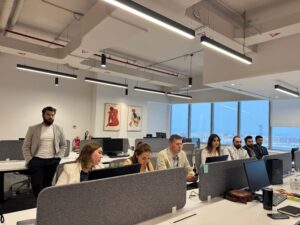
While this is taking place everything appears calm. Meetings run smoothly. Deadlines are met. There is no obvious conflict.
But beneath the surface, something of real importance may have changed. Matters which will begin to impact colleague relationships, team dynamics, productivity and organisational culture.
What’s Going On?
When people no longer feel they will be heard, understood or that speaking up will make a difference, silence can become a form of self-protection. A psychological defence mechanism that, over time, becomes silence spreading across teams, reducing creativity, collaboration, innovation and trust.
As leaders, and managers one of the most valuable questions we can ask is
“What have they stopped telling us?”

The health of an organisation is revealed not only in its performance metrics, but in the quality of its conversations and communication. These dynamics trickle down from the top and resonate into the culture.
Workers look to
- Authority Figures
- Line Managers
- Leaders
- Bosses
- SEO’s
- Role Models
And in organisations where communication is felt as safe, workers find it easier to ask questions, challenge feedback and bounce of other. In this type of culture individual team members can feel confidence and comfort, seen and heard.
In organisations where cultures of judgement, individual goals – annual bonuses and rewards etc. – and personal gain predominate, often the impact is felt throughout.Strong and powerful feelings can emerge and lurk in the shadows.
- Fear
- Jealousy
- Envy
- Frustration
- Competition
- Resentment
In teams where these feelings are experienced often silence is the way to survive.
At MiP Therapy, we believe the most influential forces shaping organisations are often the ones we cannot immediately see. They exist beneath behaviour, beneath performance, and beneath the everyday interactions that define workplace culture.
Sometimes, understanding what lies beneath is the first step towards creating workplaces where people feel able to speak, contribute and thrive.
This is exactly the kind of conversation we’ll be exploring in our upcoming newsletter, What Lies Beneath, where we examine the hidden psychological dynamics influencing leadership, relationships and organisational life.
If you are struggling at work, don’t suffer in silence. Reach out and contact us.